High Emotional Potential (HEP) screening test
HEP is a form of giftedness characterised by distinctive emotional abilities. This test determines its likelihood.
Asperger syndrome describes a particular autism spectrum profile, traditionally associated with average or above-average intelligence and no significant language delay. Difficulties may be subtle from the outside, particularly in adults who have learned to adapt, while still having a real impact on social, sensory, emotional or professional life.
The term remains widely used by the public, by many people who received this diagnosis and by those seeking to understand a particular autism profile. However, it is no longer a separate diagnosis in current classifications: the DSM-5 and then DSM-5-TR included it within Autism Spectrum Disorder (ASD), while the current international classification describes the spectrum by specifying, among other things, whether intellectual developmental disorder is present and the extent of language difficulties.
This does not mean the profile previously called Asperger has “disappeared”. Rather, it is now placed within a broader spectrum. The aim is to describe this profile specifically: this page therefore does not seek to describe forms of autism associated with intellectual disability or very high assistance needs.
The name itself has also become more controversial since historical research documented Hans Asperger’s role under the Nazi regime. Some people therefore prefer to use ASD alone; others continue to use “Asperger” because it is the term of their diagnosis or personal history, or best describes the profile they identify with. There is no need to be dogmatic about this vocabulary: what matters is understanding the person’s functioning precisely.
A list of signs alone cannot establish Asperger syndrome or ASD. However, if several characteristics have been present for a long time, sometimes since childhood, personalised screening can be a very useful first step. Responses to the screening test are personally analysed by Luc MARTRENCHAR, a clinical psychologist specialising in these profiles.
Video in French. The article below is available in English.
None of these characteristics is specific on its own. What matters is their combination, intensity, presence during development and impact on daily life. Some may be very visible; others may have been compensated for over time.
Particularly strong sensitivity to certain sounds, smells, lights, textures or bodily sensations is common. A situation others find ordinary can then become truly uncomfortable, tiring or overwhelming.
Conversely, some sensations may be perceived less strongly: cold, pain, bodily signals or other stimuli. The same person can be hypersensitive in some areas and hyposensitive in others.
Changes that seem minor can cause considerable tension, particularly when sudden: a change of route, schedule, habit, organisation or familiar environment.
Routines can provide security and reduce mental load. Some people plan extensively, like knowing in advance what will happen and enjoy improvisation less than average.
It can be difficult to change perspective, strategy or rules quickly once a way of operating seems logical and coherent. This may also come with a strong attachment to accuracy, consistency or following rules.
Certain subjects become particularly important and are explored with remarkable intensity. A person can accumulate considerable knowledge and sometimes become a real expert in their area of interest.
It is not necessarily the subject that is atypical, but sometimes the intensity, precision or degree of involvement. Interests can be quite conventional or, conversely, extremely specialised.
These can take many forms: hand or body movements, repeatedly handling an object, rocking, subtle gestures or repetitive behaviours that sometimes help regulate feelings, concentrate or reduce tension.
Some people repeat phrases, expressions, quotations or things heard previously. These characteristics may have been much more visible in childhood than adulthood.
Moving from acquaintance to a close relationship, knowing how to maintain a friendship or understanding implicit social expectations can be difficult.
Some people need fewer social relationships or prefer a few deep relationships to many contacts. This does not necessarily mean a lack of attachment or empathy: the need for connection and how it is expressed may simply differ.
Someone may know exactly what to say in one context and feel lost in another. They may seem very direct, unintentionally lack tact or need to think consciously about social rules that seem intuitive to others.
Facial expressions, gestures, posture, intonation or their coordination with speech may be less spontaneous, more subtle or simply different from those of most people.
Implications, facial expressions, changes in intonation or gestures can be difficult to interpret, especially when subtle, ambiguous or contradictory to the words spoken.
Looking someone in the eye can be uncomfortable, require conscious effort or draw attention away from the conversation. In others, eye contact may instead be very sustained or have been learned over time.
Knowing when to speak or stop, how to keep an exchange going, noticing that someone wants to change the subject or managing a phone conversation can require more effort and reflection.
Showing feelings spontaneously, talking about emotions or knowing how to share enthusiasm with someone who does not show the same interest can be difficult.
Approaching someone, joining a group, starting a conversation or responding quickly when an unfamiliar person starts talking can cause uncertainty, even when the desire for contact is present.
In the historical definition of Asperger syndrome, there was no significant general language delay. Some characteristics could nevertheless be present: very precise language, an elaborate vocabulary, unusual prosody or difficulty with implied meaning.
The profile historically called Asperger syndrome was not associated with intellectual disability. Cognitive abilities can be average, high or sometimes very high, with a profile that may remain uneven across areas.
Someone may recognise several of these characteristics in HIP, ADHD, social anxiety, certain personality features or simply their way of being. Conversely, someone with Asperger syndrome may not identify with every item in this list, particularly if they have learned to mask or compensate for certain difficulties.
What allows progress is therefore understanding the whole profile, rather than mechanically counting signs. If you clearly recognise several of these dimensions, particularly since childhood, screening is an appropriate first step.
Recognising yourself in 8 to 10 characteristics or more can be a practical pointer for considering screening, but this number is not a diagnostic threshold.
For some adults, understanding that they fit this profile allows them to see years of feeling out of step, social fatigue, relationship misunderstandings or sensory overload differently. Diagnosis is not intended to confine someone to a label. Instead, it can offer a coherent explanation for their history, help them respect their needs and avoid judging themselves by standards that do not fit their functioning.
When several possibilities overlap, such as Asperger/ASD, HIP or ADHD, a broader assessment also helps distinguish what belongs to each and identify possible combinations.
HEP is a form of giftedness characterised by distinctive emotional abilities. This test determines its likelihood.
HIP is the form of giftedness associated with a very high IQ. This test determines whether this possibility deserves exploration.
Asperger syndrome, called high-functioning autism by some, is an atypical form of functioning close to High Intellectual Potential.
This test is for parents of a child or teenager with certain characteristics of giftedness. It helps determine whether testing is appropriate.

Do you have the characteristics of Asperger syndrome? Learn about diagnosing Autism Spectrum Disorder.

Do you have Asperger syndrome or another Autism Spectrum Disorder and want to feel more fulfilled? Read, read and keep reading!
The 10 things people with Asperger syndrome find extremely difficult to tolerate!

Do you have Autism Spectrum Disorder?
Do you identify more with the characteristics of a gifted person or those of a person with Asperger Syndrome?

Discover the origins of Asperger syndrome!
The three main characteristics of Attention Deficit Hyperactivity Disorder (ADHD) are inattention, impulsivity and sometimes hyperactivity…
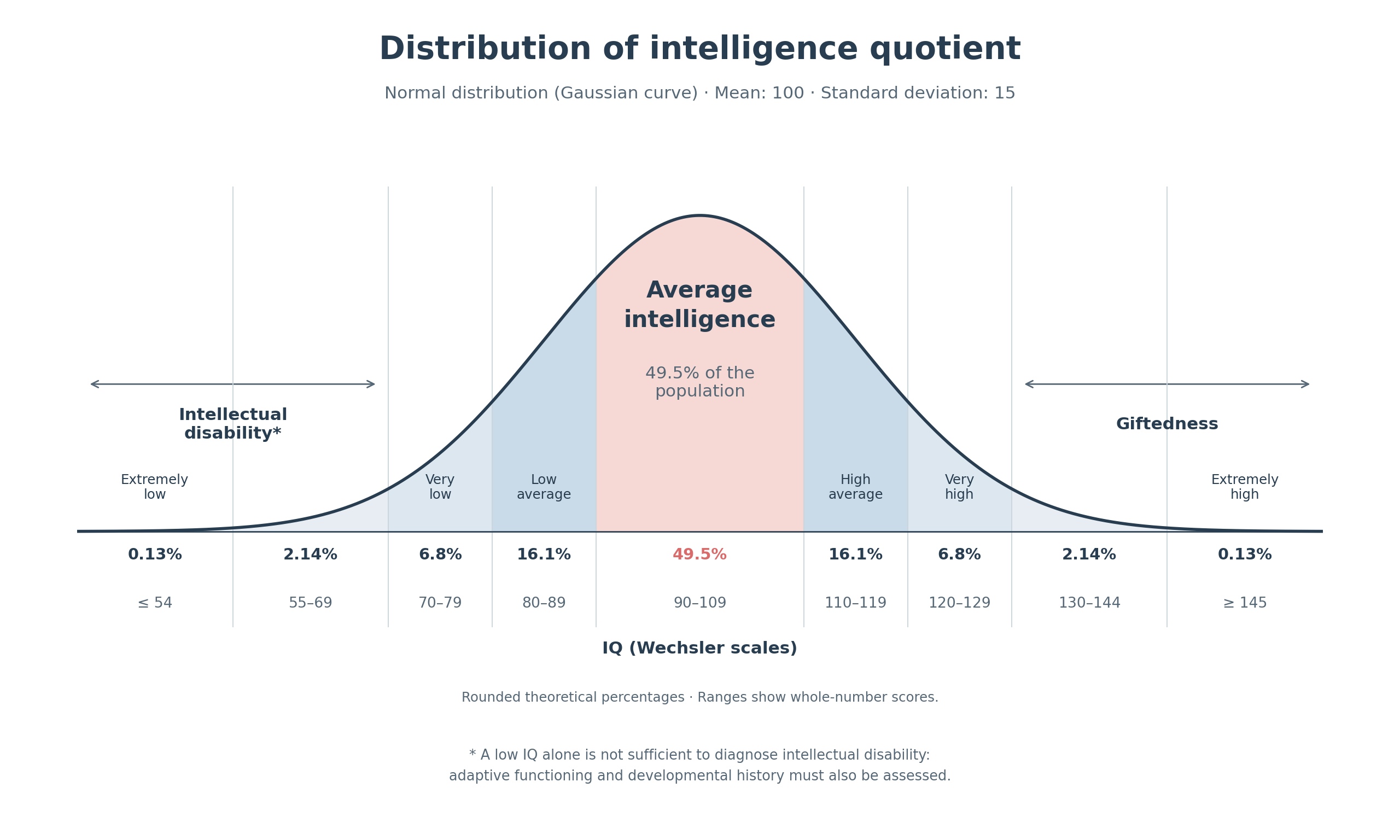
How is intellectual disability diagnosed? The associated IQ is around 70 or below…

Explore the possibility of High Emotional Potential!

20 characteristics of gifted adults!

Are you highly sensitive?