Verbal Comprehension
This area reflects understanding of concepts, use of language and the verbal knowledge the child can draw on.
Intelligence test · ages 2 years 6 months to 7 years 7 months
The WPPSI-IV assesses a young child’s intellectual ability and provides a detailed profile of cognitive functioning. It measures IQ, but also shows how the child’s different abilities are organized.
It is particularly useful when parents are wondering about possible intellectual giftedness or High Intellectual Potential, when they notice unusually advanced abilities, or when they want an objective assessment of their child’s cognitive strengths.
The WPPSI-IV is an intelligence test for young children aged 2 years 6 months to 7 years 7 months. It provides an IQ score and a much more detailed picture of the child’s cognitive and intellectual profile than a single score alone.
The assessment examines several major areas of cognitive functioning. Its value therefore lies in looking at both the child’s overall level and the way different abilities are distributed across the profile.
This area reflects understanding of concepts, use of language and the verbal knowledge the child can draw on.
This area concerns the analysis and organization of visual and spatial information.
This area explores the ability to identify logical relationships and solve novel problems.
This area reflects the ability to hold information in mind temporarily and use it to complete a task.
This area reflects the speed and accuracy with which certain simple information is processed.
The WPPSI-IV is not simply a way to obtain an IQ score. Analyzing the different domains makes it possible to understand the child’s strengths and any meaningful differences within the cognitive profile more precisely.
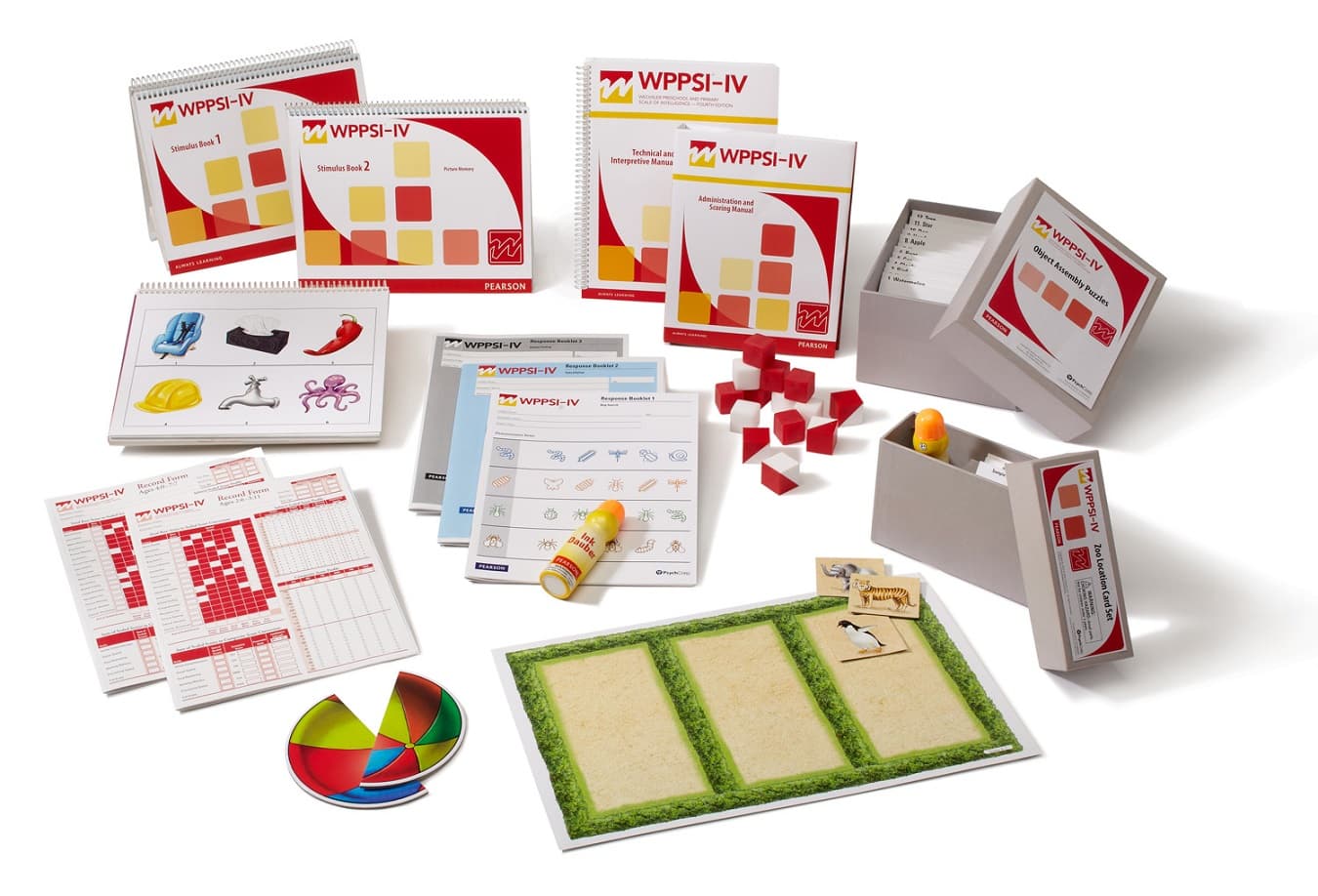
The WPPSI-IV can be used to explore possible intellectual giftedness or High Intellectual Potential. It provides an objective measure when parents notice unusual abilities or want a more precise understanding of their child’s intellectual functioning.
The test moves beyond impressions and measures intellectual abilities with a standardized instrument.
It shows more precisely the areas in which the child demonstrates their most developed abilities.
When some abilities are much stronger than others, detailed analysis prevents the child from being reduced to a single overall IQ score.
When the IQ score is very close to 130, the second part of the psychological assessment may be needed to determine more confidently whether the child should be considered gifted. Interpretation therefore does not rely on a single numerical threshold alone.
The session usually lasts around 1 hour 15 minutes, a little less for children under 4 and a little longer for children aged 4 and above.
The IQ score and the different cognitive domains are analyzed in order to understand the child’s profile and how their abilities are organized.
The results are explained in detail. Feedback can take place soon after testing, including as early as the following day.
I offer the WPPSI-IV in French or in English. The aim is for the young child to take the test in the language they know best.
Although the WPPSI-IV can be used up to 7 years 7 months, it is often preferable to use the WISC-V from age 6.
The test designed for younger children, starting at age 2 years 6 months.
From age 6, the WISC-V is often preferred when both tests are theoretically possible.
When the main question is possible intellectual giftedness, the gifted child screening test can be a useful first step. It helps estimate how likely giftedness appears and whether a WPPSI-IV assessment is recommended.
The WPPSI-IV is designed for young children aged 2 years 6 months to 7 years 7 months.
No. It also examines several areas of cognitive functioning: verbal comprehension, visual spatial abilities, fluid reasoning, working memory and processing speed.
Testing usually lasts around 1 hour 15 minutes, a little less before age 4 and a little longer from age 4 onward.
Although the WPPSI-IV can be used up to 7 years 7 months, it is often preferable to use the WISC-V from age 6.
Yes. Testing can be offered in French or English so that the child can be assessed in the language they know best.
Understand possible characteristics of a young child with High Intellectual Potential and why identifying it can sometimes be useful.
Read the article →Understand the WISC-V and how it assesses a child’s intellectual abilities.
Learn about the WISC-V →A first step in deciding whether an IQ test appears appropriate for your child.
Take the screening test →The WPPSI-IV provides an objective measure of intellectual ability and a detailed picture of the child’s cognitive profile. When possible giftedness is being considered, it offers much stronger information than impressions alone.

Find out how likely you are to have High Emotional Potential!

Are you a “zebra”?

Are you highly sensitive?